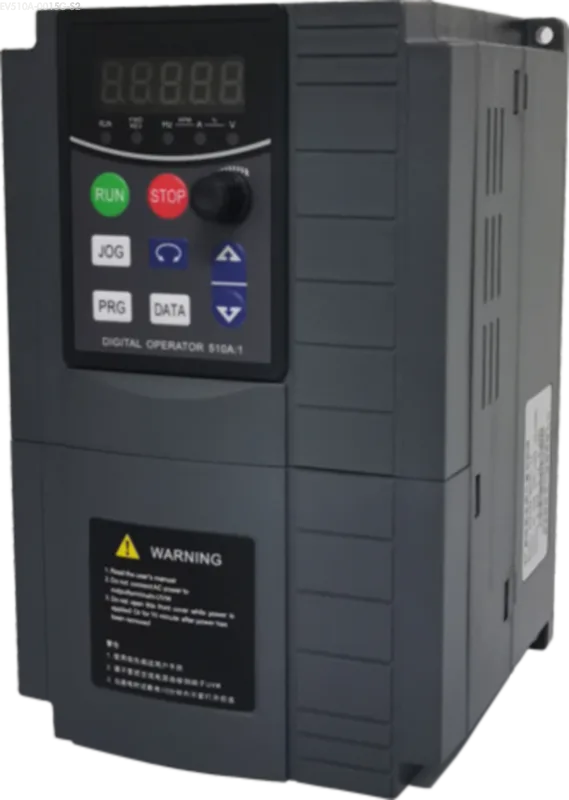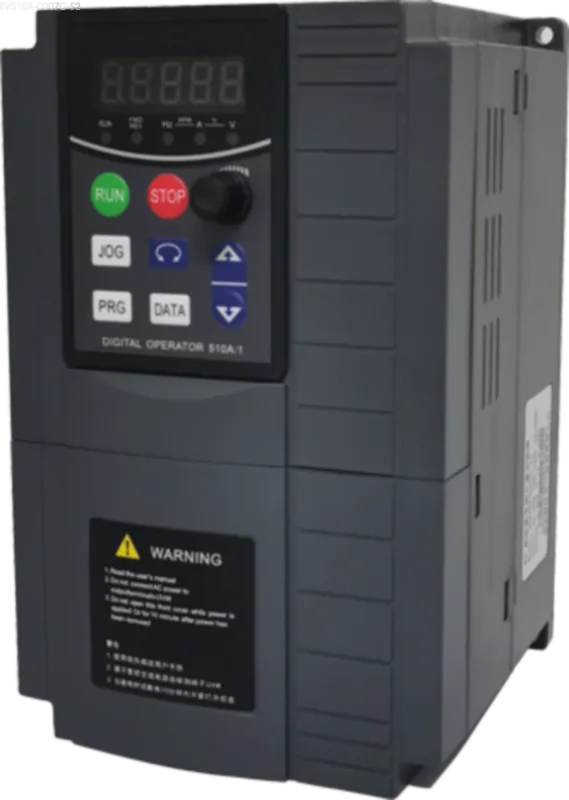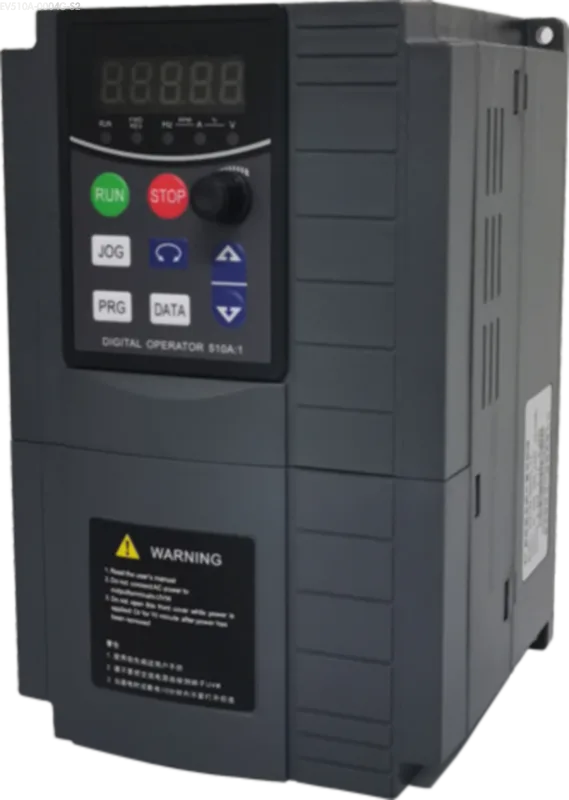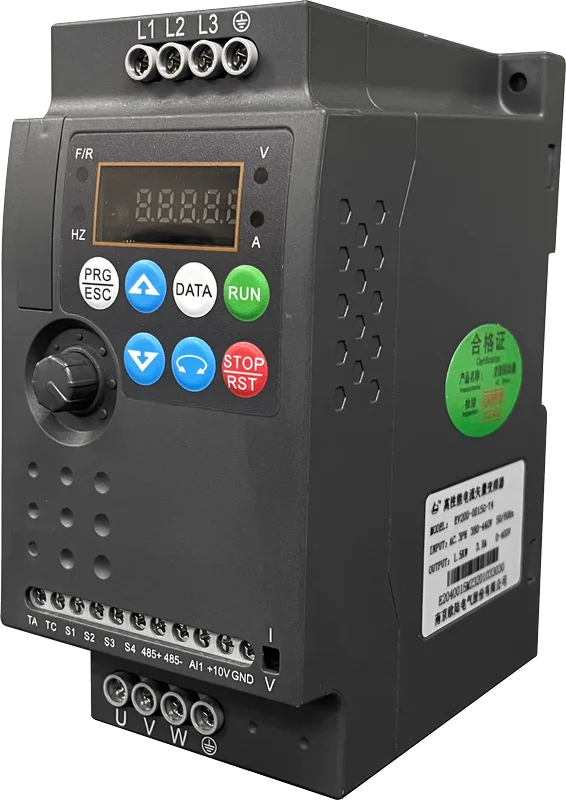


EV210-0004G-S2: VFD vettoriale compatto ad alte prestazioni | 0,4kW, 220V
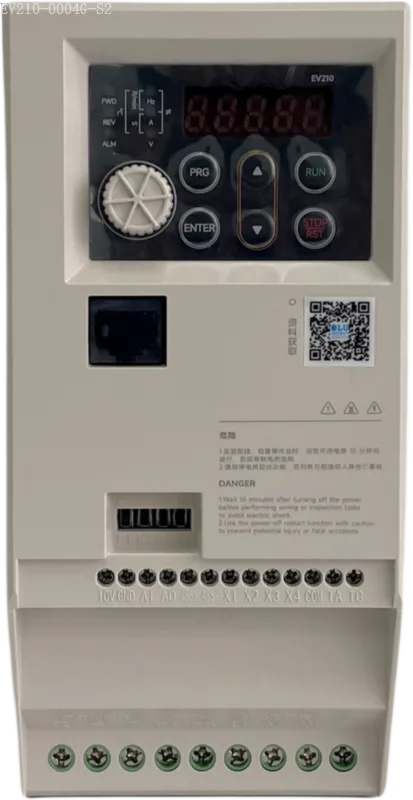
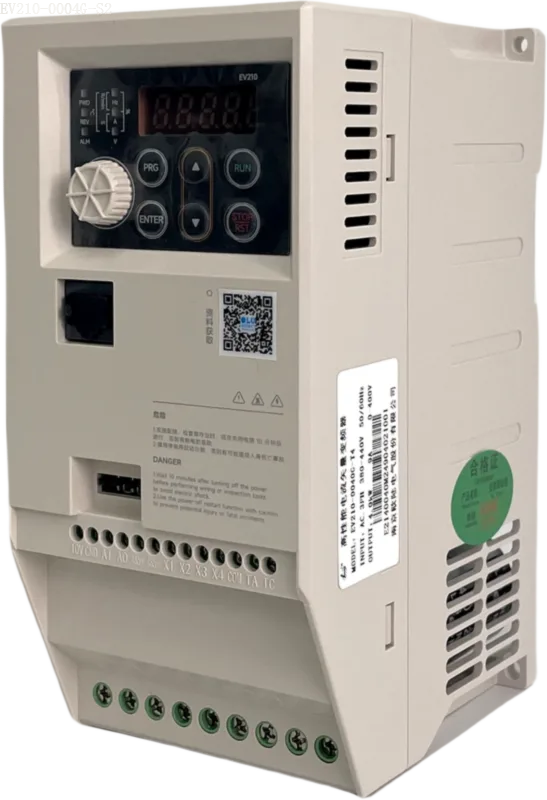
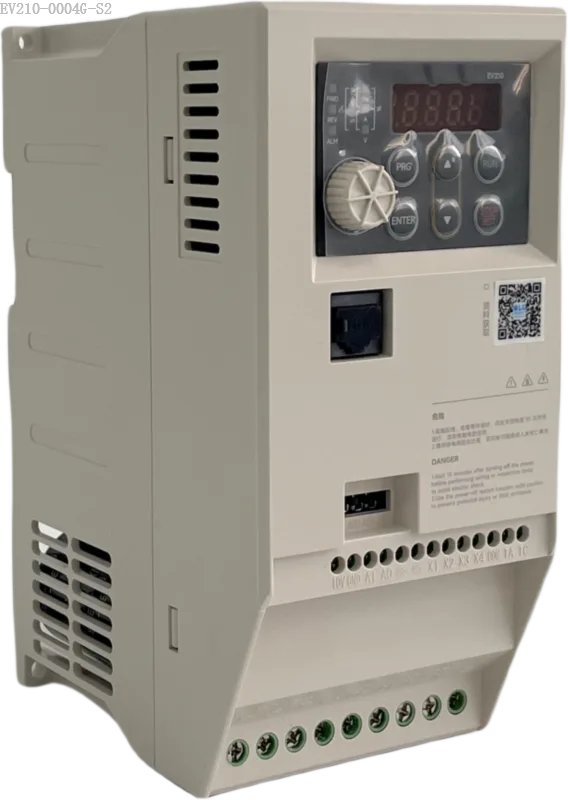
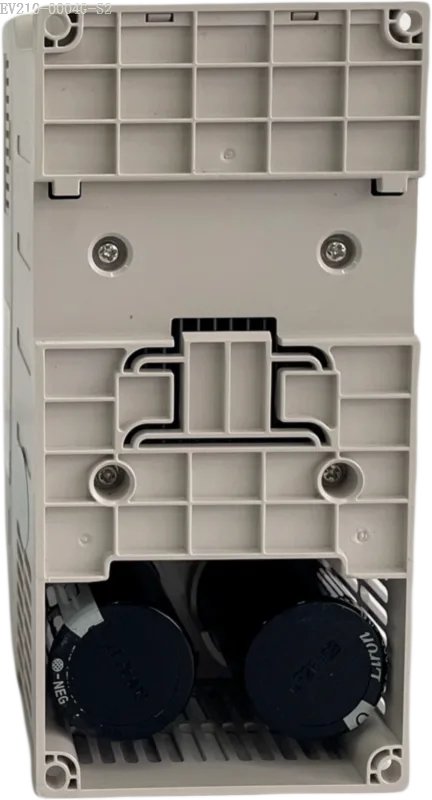
Why Choose This 0.4kW (0.5HP) 220V Compact Vector VFD?
Choosing the right drive is critical. This specific 0.4kW (0.5HP) VFD is the ideal solution when your application is too demanding for a basic mini-drive, but the installation space is too small for a full-sized vector drive.
- The “Compact Vector” Hybrid Advantage: This is the perfect hybrid drive. When a basic miniature AC drive (like the EV200, designed for “simple speed regulation” ) lacks the precision for your load, the EV210-0004G-S2 provides the advanced vector control you need in the compact form factor you want.
- Precision for Complex Micro-Machinery: This AC motor speed controller excels in applications beyond simple fans. Its vector control is essential for macchine utensili , avvolgitori tessili , o macchine per l'imballaggio in cui il motore deve mantenere una velocità e una coppia precise con carichi variabili.
- Quiet, Reliable Operation: The adjustable carrier frequency provides low noise operation , a critical feature for equipment installed in noise-sensitive environments like laboratories or small workshops.
- Cost-Effective Automation: By integrating PID and RS485 communication , this compact vector VFD can simplify your system design, eliminating the need for external controllers and reducing total system cost and complexity.
Campi di applicazione tipici

Macchinari tessili
A perfect textile machine VFD for small winders, spinning frames, and knitting machines requiring precise tension and speed synchronization in a compact form factor.
CNC & Machine Tools
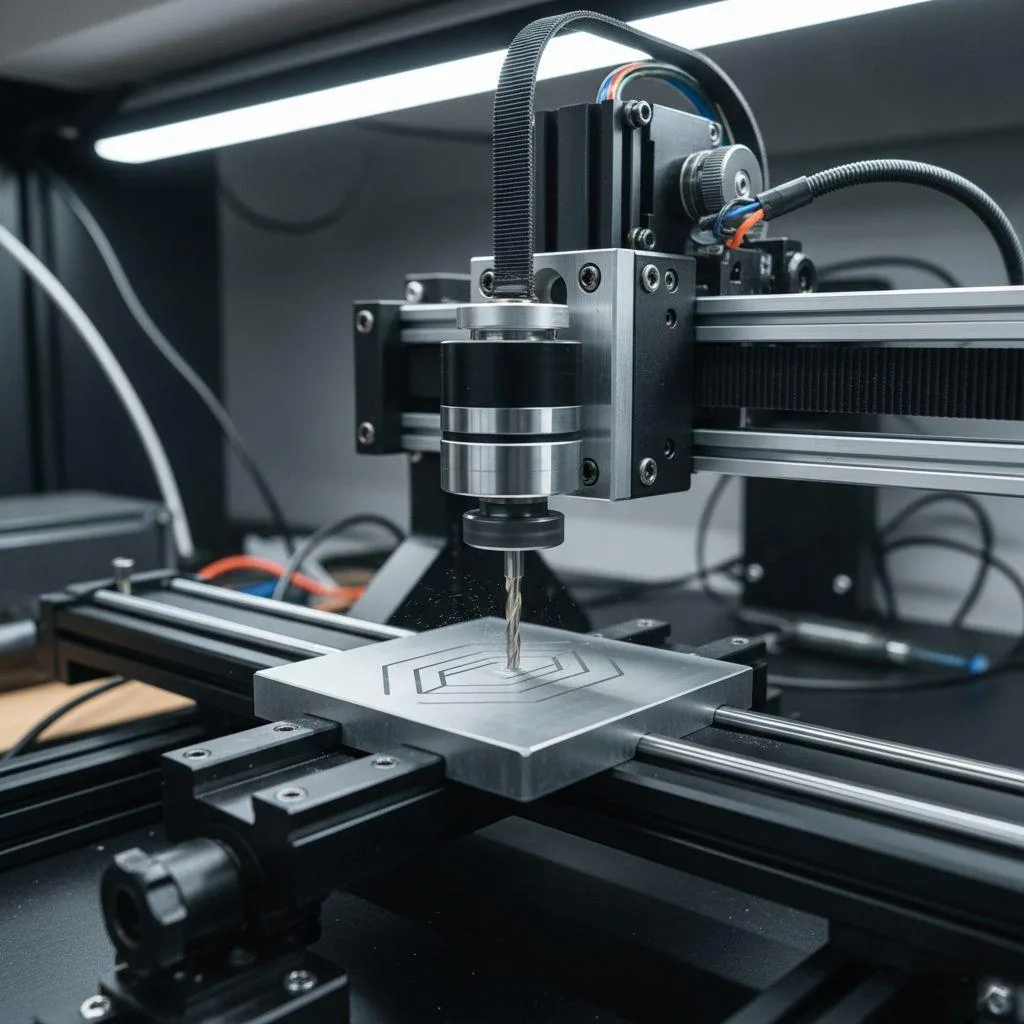
Provides the precise sensorless vector control needed for CNC engraving spindles, small machine tools , grinders, and lathes that require stable torque across their speed range.
Laboratory & Medical
Its low noise operation and precision make it suitable for medical centrifuges or advanced laboratory mixers and samplers.


Caratteristiche di controllo
Modalità di controllo | Controllo vettoriale della corrente ad alte prestazioni, controllo vettoriale sensorless (SVC), controllo V/F |
|---|---|
Frequenza massima | Controllo vettoriale: 0~500Hz; controllo V/F: 0~500Hz |
Frequenza portante | 0,5KHz ~ 16,0KHz (regolabile, per un funzionamento a basso rumore) |
Tracciamento della velocità | Caratteristiche “funzione di riavvio della velocità di inseguimento” |
Frenatura CC | Frequenza di avvio: 0,00 ~ Freq massima; Tempo di frenata: 0,0 ~ 100,0s |
Tempo di accelerazione/decelerazione | 0,0s ~ 6500,0s |
Specifiche I/O
Ingresso analogico | 1 canale (0~10V / 0~20mA) |
|---|---|
Uscita analogica | 1 canale (0~10V / 0~20mA) |
Uscita digitale | 1 uscita a relè programmabile (TA, TC) |
Comunicazione | RS-485 standard (Modbus) |
Ambiente operativo
Sito di installazione | In ambienti chiusi, senza luce solare diretta, senza polvere, gas corrosivi, ecc. |
|---|---|
Altitudine | Sotto i 1000 metri |
Temperatura ambiente | Da -10°C a +40°C |
Umidità | <95%RH, senza condensa |
Dimensioni strutturali
Dimensioni (L x P x A) | 72 x 105 x 146 mm |
|---|---|
Dimensioni di installazione (A x B) | 63,0 x 136,5 mm |
Foro di installazione | φ2.3 |
Garanzia di qualità
Questo prodotto è sviluppato e fabbricato da Nanjing Oulu Electric Corp. In qualità di impresa nazionale ad alta tecnologia focalizzata sull'automazione industriale e sulle nuove energie, disponiamo di un team esperto di ricerca e sviluppo e di impianti di produzione avanzati, dedicati a fornire prodotti e soluzioni affidabili e di alta qualità ai clienti di tutto il mondo.
Domande frequenti (FAQ)
1. What is the main difference between the 0.4kW EV210 and the 0.4kW EV200 VFD?
The key difference is the control method and positioning. The EV200 is a “small inverter” designed for semplice regolazione della velocità. The EV210 is a “high-performance miniature inverter” that integrates advanced current vector control. Choose the EV200 for simple applications like small fans or basic conveyors. Choose the EV210 for applications needing precise speed, high starting torque, or stable control under load, such as machine tools or packaging.
2. Can I use this 0.4kW VFD for a CNC or machine tool spindle motor?
Yes, the EV210-0004G-S2 is an excellent choice for small machine tool spindles. Its sensorless vector control provides stable torque even at low speeds, which is crucial for cutting. Furthermore, its adjustable high-carrier frequency (up to 16.0KHz) ensures low noise operation , reducing the “whine” from the motor.
3. What is the benefit of the ‘speed tracking restart’ function?
This function allows the VFD to smoothly “catch” a motor that is already spinning (e.g., a fan coasting after a brief power outage) and return it to the set speed without a harsh start or tripping on overcurrent. This is critical for reliable, uninterrupted operation in automated systems.
4. How does the built-in PID controller work?
The built-in PID allows the VFD to automatically regulate motor speed to maintain a process variable. For example, you can connect a pressure sensor (as an analog input) and set a target pressure. The VFD will then speed up or slow down a small pump to perfectly maintain that pressure, all without needing an external PLC.
Guida rapida (come fare)
Attenzione: I passi seguenti sono solo una guida di base. Tutti i lavori elettrici devono essere eseguiti da personale professionale qualificato. Prima di effettuare qualsiasi cablaggio, assicurarsi che l'alimentazione principale sia completamente scollegata e attendere almeno 10 minuti affinché i condensatori interni del VFD si scarichino completamente.
Fase 1: installazione
Mount the VFD vertically on a sturdy, non-flammable surface (like a metal backplate) or a DIN rail in a well-ventilated cabinet. Ensure sufficient clearance for airflow. The compact 72mm width allows for high-density, side-by-side installation.
Fase 2: cablaggio del circuito principale
- Collegare le linee di alimentazione monofase a 220 V CA ai terminali di ingresso dell'inverter S/L1 e T/L2.
- Connect the three wires of your 0.4kW (0.5HP) three-phase asynchronous motor to the inverter’s output terminals U, V, and W.
- Collegare saldamente il filo di terra al terminale PE (Protective Earth) dell'inverter.
Fase 3: cablaggio del circuito di controllo (per l'avvio/arresto di base a 2 fili)
- Collegare un'estremità di un interruttore (o pulsante) esterno al terminale di ingresso digitale X1.
- Collegare l'altra estremità dell'interruttore al terminale comune COM.
- (This setup uses X1 for a simple “Run” command in 2-wire mode).
Passo 4: Impostazione e configurazione dei parametri del motore
- Alla prima accensione, impostare i parametri del VFD in modo che corrispondano alla targhetta del motore:
- Set P1-01 (Motor Rated Power) to 0.4 (kW).
- Impostare P1-02 (Tensione nominale del motore) su 220 (V).
- Impostare P1-03 (corrente nominale del motore) in base alla targhetta del motore.
- Impostare P1-04 (Frequenza nominale del motore) (ad esempio, 50 o 60 Hz).
- Impostare P1-05 (Velocità nominale del motore) (ad es. 1440, 2800, ecc.).
- Per abilitare l'avvio/arresto a 2 fili dal passaggio 3:
- Set P0-02 (Command source) to “1” (Terminal command channel).
- Set P4-00 (X1 function selection) to “1” (Forward run).
- For optimal vector control performance, perform a motor auto-tune (set P1-37, see manual for details).
Fase 5: Esecuzione del test
Dopo aver confermato tutti i cablaggi e le impostazioni, accendere l'alimentazione principale. Chiudere l'interruttore esterno collegato tra X1 e COM. Il motore dovrebbe avviarsi e funzionare in direzione di marcia. Se si apre l'interruttore, il motore decelera e si ferma.
Caratteristiche e vantaggi principali
- Advanced Vector Control in a Miniature Body: This drive integrates a high-performance current vector inverter into a compact frame. It provides outstanding torque characteristics and precise speed control (SVC), far superior to standard V/F control , making it ideal for dynamic loads.
- Ultra-Compact, Space-Saving Design: Measuring only 72mm wide and 105mm deep , this miniature vector VFD is designed for high-density DIN-rail mounting in crowded control cabinets, saving space and reducing overall machine footprint.
- Quiet & Stable Performance: Engineered for low noise operation, the VFD features an adjustable carrier frequency (0.5KHz ~ 16.0KHz) to minimize high-frequency motor noise, making it suitable for laboratory or light commercial environments. The Automatic Voltage Control (AVR) function ensures stable performance even with grid fluctuations.
- Integrated PID & PLC Functions: Features a built-in PID controller and Easy PLC function, enabling simple closed-loop process control (e.g., managing pressure, flow) and basic multi-segment speed operation.
- Reliable System Protection: Offers comprehensive protection functions , including overcurrent, overvoltage, undervoltage, overheat, and overload. Includes a speed tracking restart function for a smooth, safe recovery from a momentary power loss.
- Flexible System Integration: Standard built-in RS485 communication (Modbus protocol) allows this 0.4kW VFD to be easily integrated into larger automation systems. Flexible I/O includes analog inputs (0-10V/0-20mA) and a programmable relay output.
File | Dimensione | Azione |
|---|---|---|
Guida alla selezione dei VFD.pdf | 4.2MB | |
Manuale d'uso VFD EV210.pdf | 1,3MB |