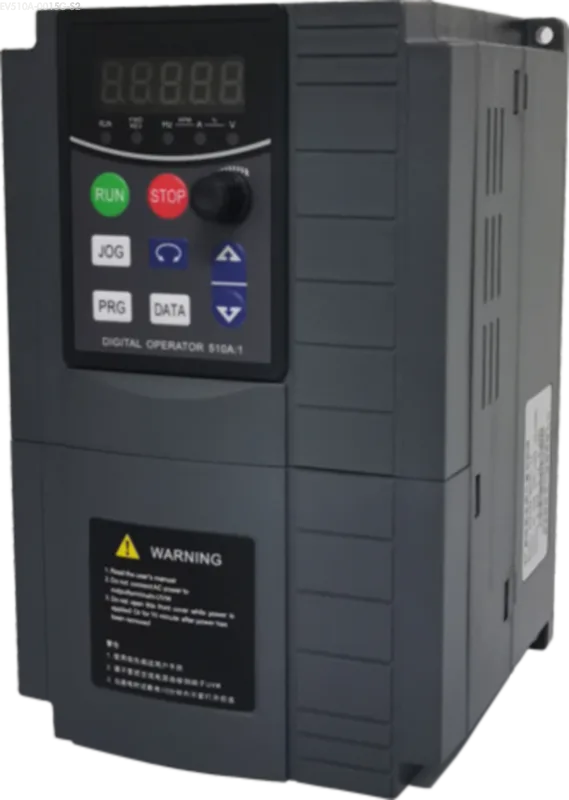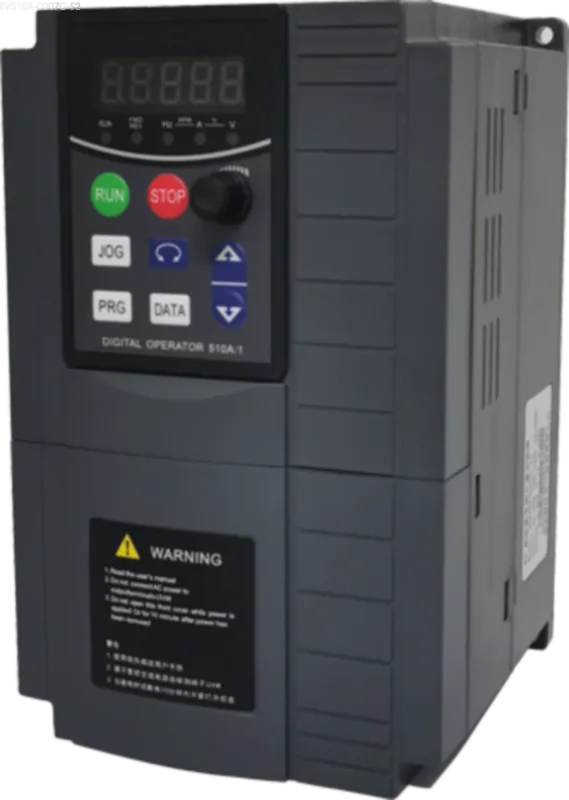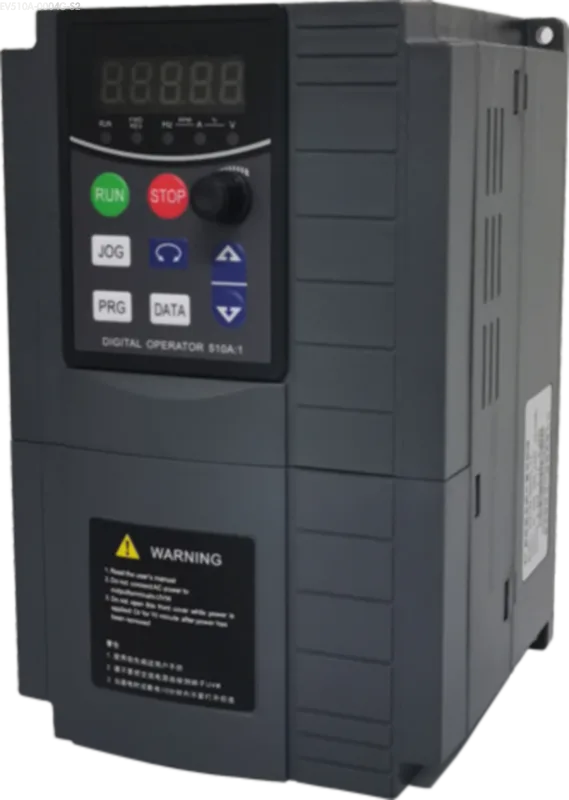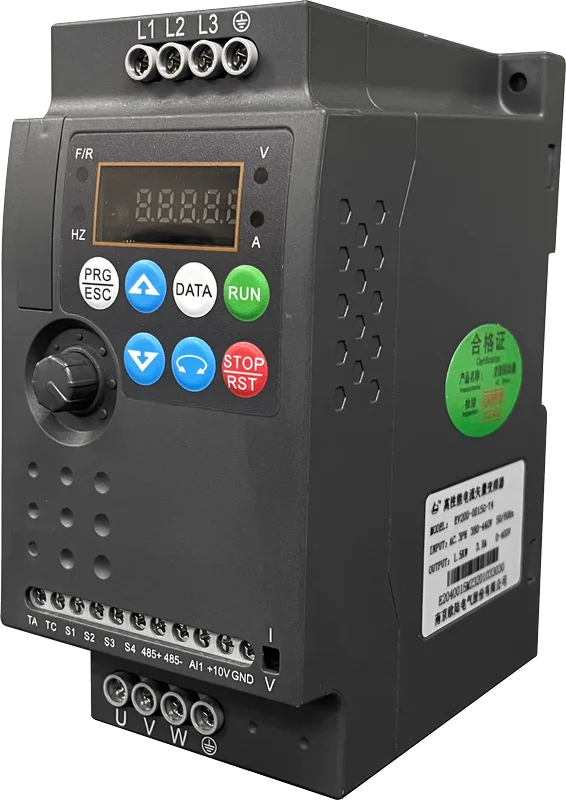
EV210-0004G-S2: Compact High-Performance Vector VFD | 0.4kW, 220V
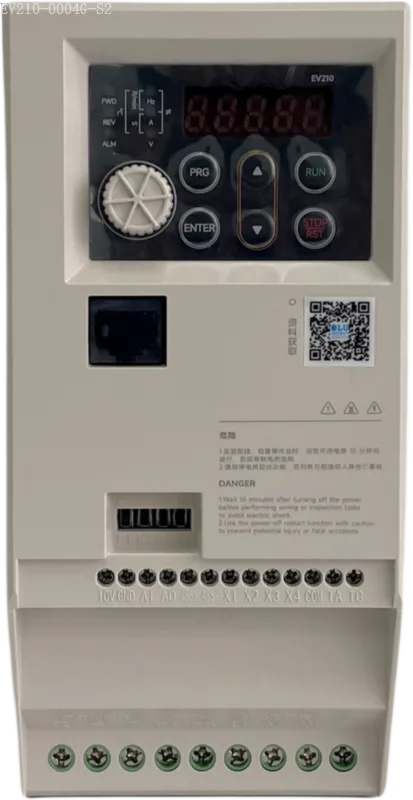
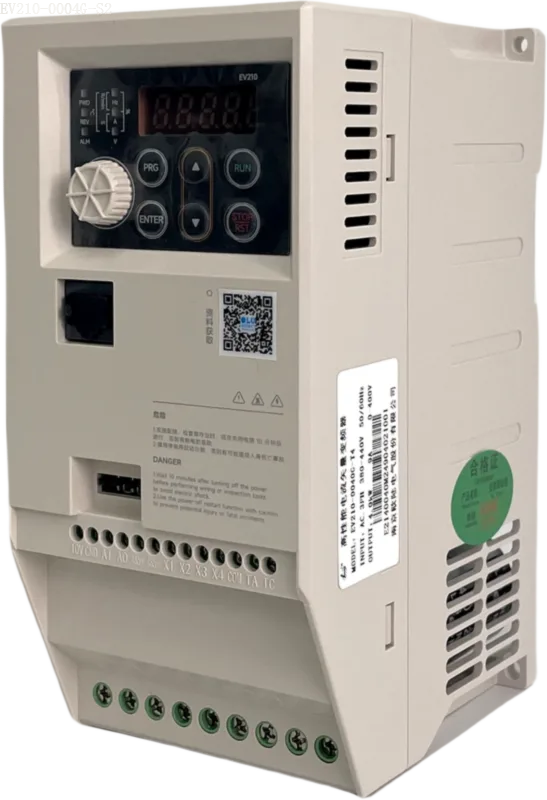
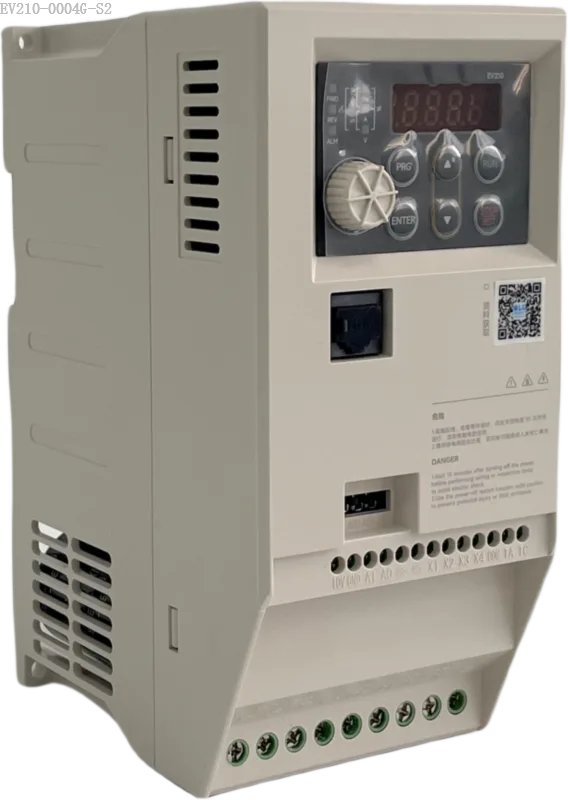
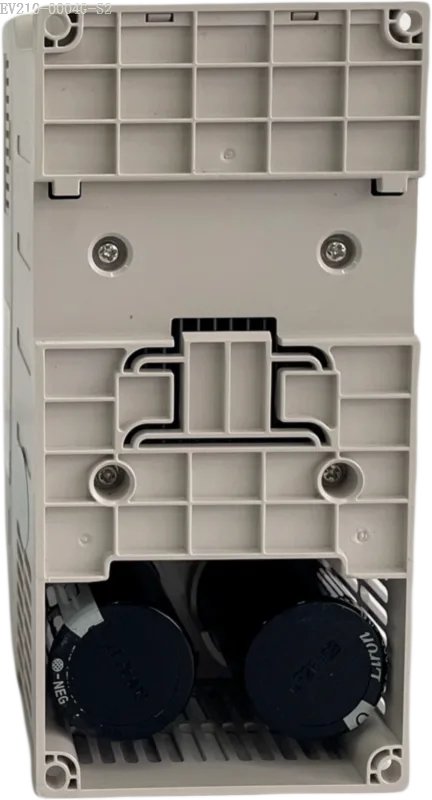
Why Choose This 0.4kW (0.5HP) 220V Compact Vector VFD?
Choosing the right drive is critical. This specific 0.4kW (0.5HP) VFD is the ideal solution when your application is too demanding for a basic mini-drive, but the installation space is too small for a full-sized vector drive.
- The “Compact Vector” Hybrid Advantage: This is the perfect hybrid drive. When a basic miniature AC drive (like the EV200, designed for “simple speed regulation” ) lacks the precision for your load, the EV210-0004G-S2 provides the advanced vector control you need in the compact form factor you want.
- Precision for Complex Micro-Machinery: This AC motor speed controller excels in applications beyond simple fans. Its vector control is essential for machine tools , textile winders , or packaging machines where the motor must maintain exact speed and torque under varying loads.
- Quiet, Reliable Operation: The adjustable carrier frequency provides low noise operation , a critical feature for equipment installed in noise-sensitive environments like laboratories or small workshops.
- Cost-Effective Automation: By integrating PID and RS485 communication , this compact vector VFD can simplify your system design, eliminating the need for external controllers and reducing total system cost and complexity.
Typical Application Fields

Textile Machinery
A perfect textile machine VFD for small winders, spinning frames, and knitting machines requiring precise tension and speed synchronization in a compact form factor.
CNC & Machine Tools
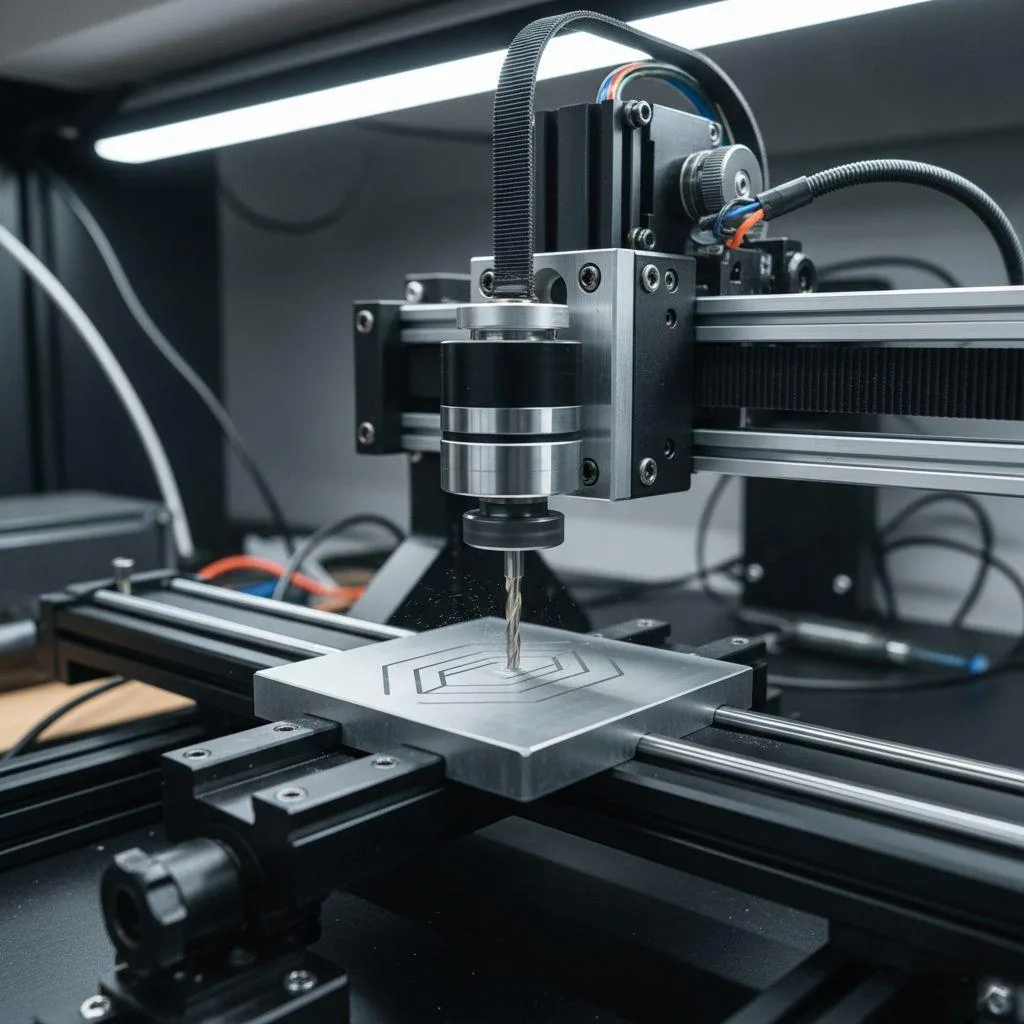
Provides the precise sensorless vector control needed for CNC engraving spindles, small machine tools , grinders, and lathes that require stable torque across their speed range.
Laboratory & Medical
Its low noise operation and precision make it suitable for medical centrifuges or advanced laboratory mixers and samplers.


Control Characteristics
Control Mode | High-Performance Current Vector Control , Sensorless Vector Control (SVC), V/F Control |
|---|---|
Highest Frequency | Vector Control: 0~500Hz; V/F Control: 0~500Hz |
Carrier Frequency | 0.5KHz ~ 16.0KHz (Adjustable, for low noise operation) |
Speed Tracking | Features “speed tracking speed restart function” |
DC Braking | Start Frequency: 0.00 ~ Max Freq; Braking Time: 0.0 ~ 100.0s |
Accel/Decel Time | 0.0s ~ 6500.0s |
I/O Specifications
Analog Input | 1 channel (0~10V / 0~20mA) |
|---|---|
Analog Output | 1 channel (0~10V / 0~20mA) |
Digital Output | 1 Programmable Relay Output (TA, TC) |
Communication | Standard RS-485 (Modbus) |
Operating Environment
Installation Site | Indoors, no direct sunlight, no dust, corrosive gases, etc. |
|---|---|
Altitude | Below 1000 meters |
Ambient Temperature | -10°C to +40°C |
Humidity | <95%RH, no condensation |
Structural Dimensions
Dimensions (W x D x H) | 72 x 105 x 146 mm |
|---|---|
Installation Size (A x B) | 63.0 x 136.5 mm |
Installation Hole | φ2.3 |
Quality Assurance
This product is developed and manufactured by Nanjing Oulu Electric Corp., Ltd. As a national high-tech enterprise focusing on industrial automation and new energy, we have an experienced R&D team and advanced production facilities, dedicated to providing high-quality, reliable products and solutions to customers worldwide.
Frequently Asked Questions (FAQ)
1. What is the main difference between the 0.4kW EV210 and the 0.4kW EV200 VFD?
The key difference is the control method and positioning. The EV200 is a “small inverter” designed for simple speed regulation. The EV210 is a “high-performance miniature inverter” that integrates advanced current vector control. Choose the EV200 for simple applications like small fans or basic conveyors. Choose the EV210 for applications needing precise speed, high starting torque, or stable control under load, such as machine tools or packaging.
2. Can I use this 0.4kW VFD for a CNC or machine tool spindle motor?
Yes, the EV210-0004G-S2 is an excellent choice for small machine tool spindles. Its sensorless vector control provides stable torque even at low speeds, which is crucial for cutting. Furthermore, its adjustable high-carrier frequency (up to 16.0KHz) ensures low noise operation , reducing the “whine” from the motor.
3. What is the benefit of the ‘speed tracking restart’ function?
This function allows the VFD to smoothly “catch” a motor that is already spinning (e.g., a fan coasting after a brief power outage) and return it to the set speed without a harsh start or tripping on overcurrent. This is critical for reliable, uninterrupted operation in automated systems.
4. How does the built-in PID controller work?
The built-in PID allows the VFD to automatically regulate motor speed to maintain a process variable. For example, you can connect a pressure sensor (as an analog input) and set a target pressure. The VFD will then speed up or slow down a small pump to perfectly maintain that pressure, all without needing an external PLC.
Quick Start Guide (How-To)
Warning: The following steps are a basic guide only. All electrical work must be performed by qualified professional personnel. Before any wiring, ensure the main power is completely disconnected and wait at least 10 minutes for the internal capacitors of the VFD to fully discharge.
Step 1: Installation
Mount the VFD vertically on a sturdy, non-flammable surface (like a metal backplate) or a DIN rail in a well-ventilated cabinet. Ensure sufficient clearance for airflow. The compact 72mm width allows for high-density, side-by-side installation.
Step 2: Main Circuit Wiring
- Connect your Single Phase 220V AC power lines to the inverter’s input terminals S/L1 and T/L2.
- Connect the three wires of your 0.4kW (0.5HP) three-phase asynchronous motor to the inverter’s output terminals U, V, and W.
- Securely connect the ground wire to the inverter’s PE (Protective Earth) terminal.
Step 3: Control Circuit Wiring (for Basic 2-Wire Start/Stop)
- Connect one end of an external switch (or button) to the digital input terminal X1.
- Connect the other end of the switch to the common terminal COM.
- (This setup uses X1 for a simple “Run” command in 2-wire mode).
Step 4: Motor Parameter Setting & Configuration
- Upon first power-up, set the VFD parameters to match your motor’s nameplate :
- Set P1-01 (Motor Rated Power) to 0.4 (kW).
- Set P1-02 (Motor Rated Voltage) to 220 (V).
- Set P1-03 (Motor Rated Current) based on your motor’s nameplate.
- Set P1-04 (Motor Rated Frequency) (e.g., 50 or 60 Hz).
- Set P1-05 (Motor Rated Speed) (e.g., 1440, 2800, etc.).
- To enable the 2-wire start/stop from Step 3:
- Set P0-02 (Command source) to “1” (Terminal command channel).
- Set P4-00 (X1 function selection) to “1” (Forward run).
- For optimal vector control performance, perform a motor auto-tune (set P1-37, see manual for details).
Step 5: Test Run
After confirming all wiring and settings, turn on the main power. Close the external switch connected between X1 and COM. The motor should start and run in the forward direction. Open the switch, and the motor will decelerate and stop.
Core Features & Advantages
- Advanced Vector Control in a Miniature Body: This drive integrates a high-performance current vector inverter into a compact frame. It provides outstanding torque characteristics and precise speed control (SVC), far superior to standard V/F control , making it ideal for dynamic loads.
- Ultra-Compact, Space-Saving Design: Measuring only 72mm wide and 105mm deep , this miniature vector VFD is designed for high-density DIN-rail mounting in crowded control cabinets, saving space and reducing overall machine footprint.
- Quiet & Stable Performance: Engineered for low noise operation, the VFD features an adjustable carrier frequency (0.5KHz ~ 16.0KHz) to minimize high-frequency motor noise, making it suitable for laboratory or light commercial environments. The Automatic Voltage Control (AVR) function ensures stable performance even with grid fluctuations.
- Integrated PID & PLC Functions: Features a built-in PID controller and Easy PLC function, enabling simple closed-loop process control (e.g., managing pressure, flow) and basic multi-segment speed operation.
- Reliable System Protection: Offers comprehensive protection functions , including overcurrent, overvoltage, undervoltage, overheat, and overload. Includes a speed tracking restart function for a smooth, safe recovery from a momentary power loss.
- Flexible System Integration: Standard built-in RS485 communication (Modbus protocol) allows this 0.4kW VFD to be easily integrated into larger automation systems. Flexible I/O includes analog inputs (0-10V/0-20mA) and a programmable relay output.
File | Size | Action |
|---|---|---|
VFD Selection Guide.pdf | 4.2MB | |
VFD EV210 User Manual.pdf | 1.3MB |