What Causes VFD Overcurrent? Diagnosis & Fixes
Introduction
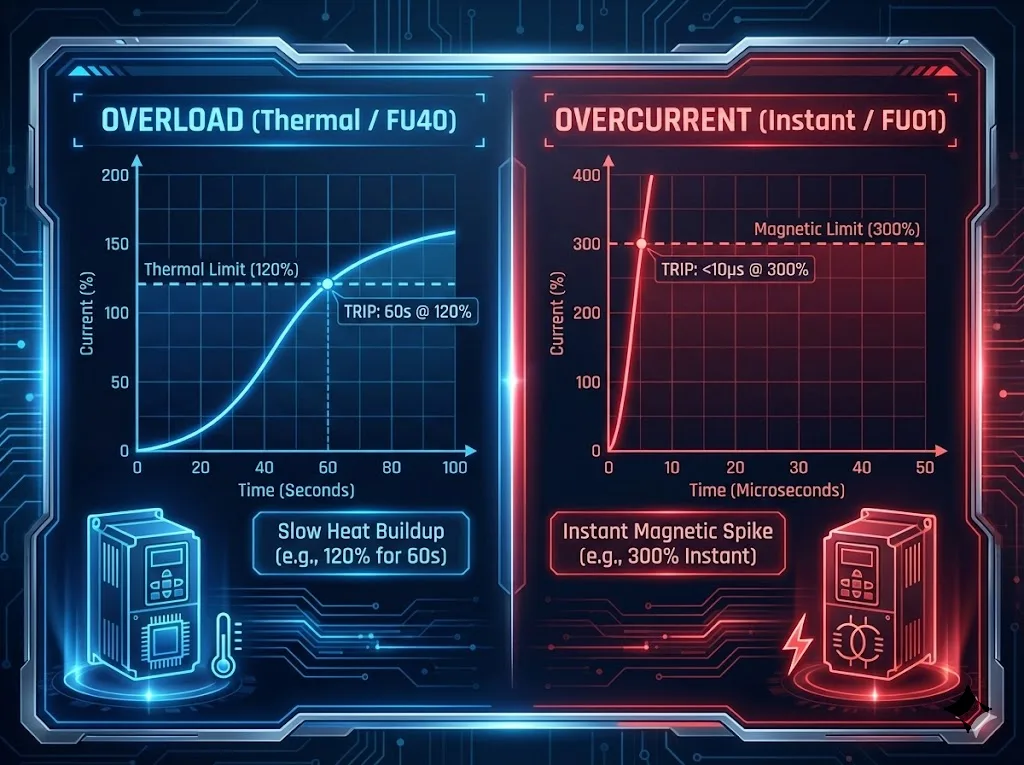
An overcurrent fault is the most aggressive error a Variable Frequency Drive (VFD) can throw. Unlike an overload, which is a slow thermal buildup, an overcurrent event is instantaneous. It is a violent spike in amperage that hits 200% to 300% of the drive’s rating in microseconds.
At OULU Electric, we field support calls about this daily. When your screen flashes FU01, FU02, or SC, the drive isn’t just complaining; it is saving itself from exploding. To fix this, you must stop resetting the breaker and start diagnosing the physics of your system.
What is a vfd overcurrent fault?
You must distinguish between “Overload” and “Overcurrent.” They are not synonyms.
- Overload (FU40/OL): The motor is working too hard over time (Heat).
- Overcurrent (FU01/SC): There is a short circuit, a ground fault, or a massive shock load (Instant Spike).
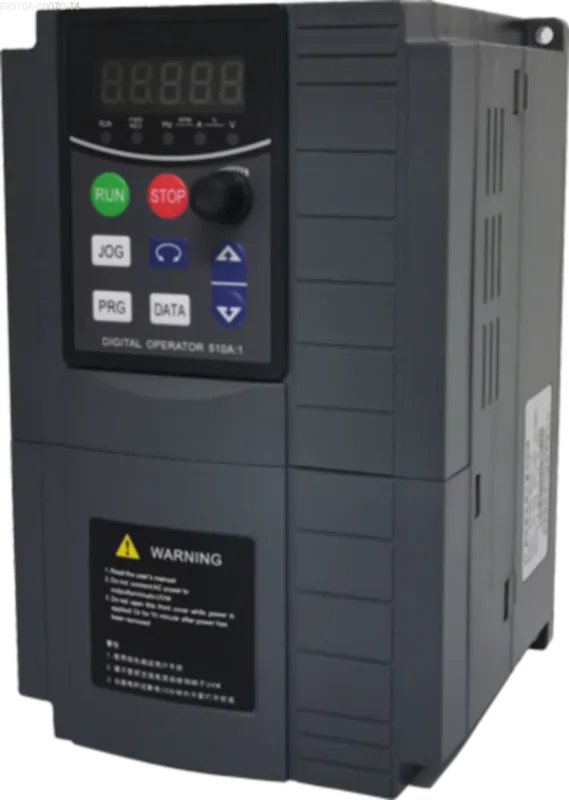
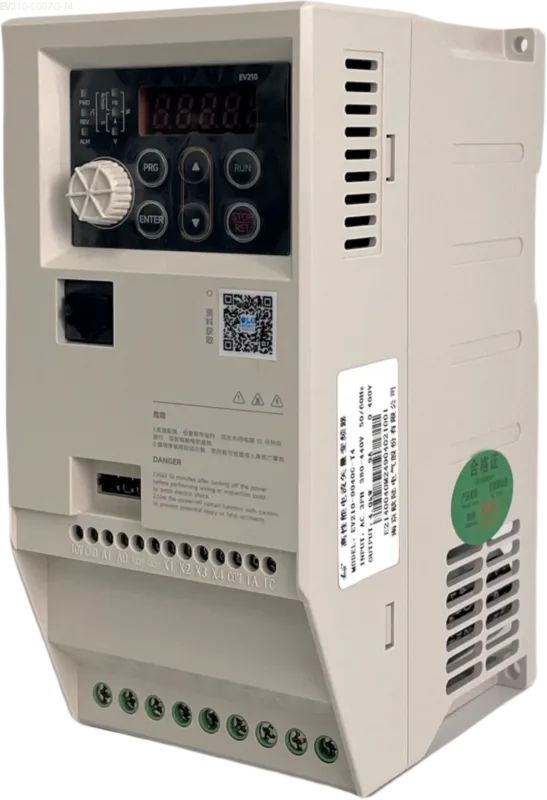
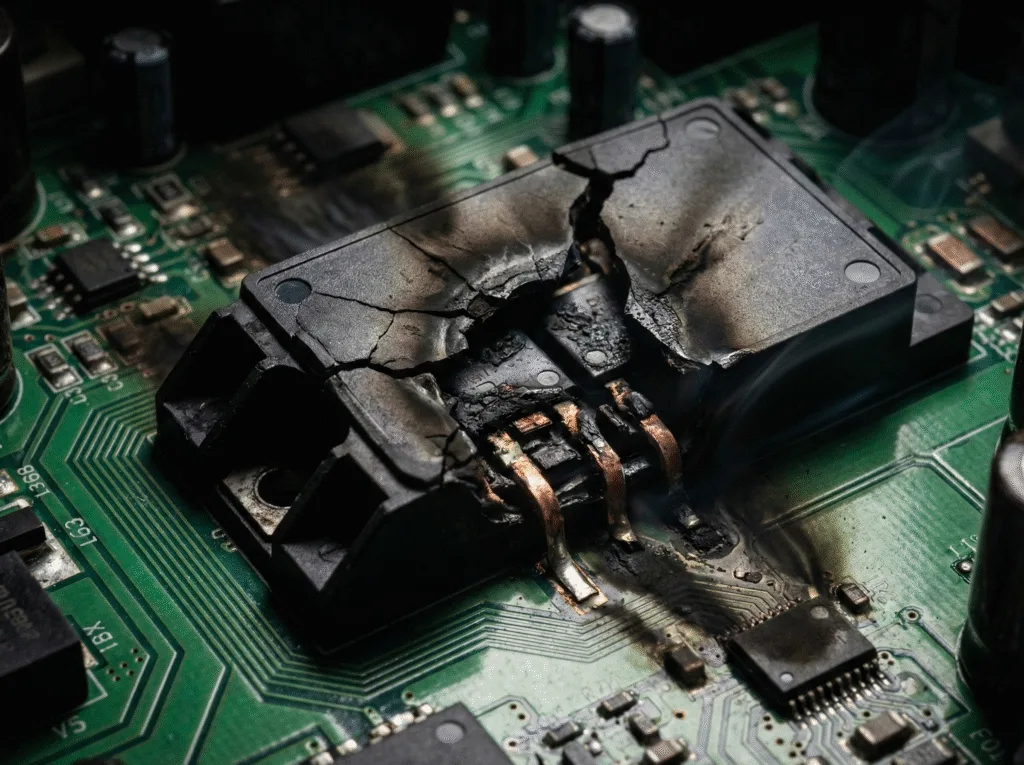
A vfd overcurrent fault occurs when the output current exceeds the hardware limit of the drive’s IGBTs (Insulated-Gate Bipolar Transistors). The drive’s internal Hall sensors detect this spike and shut down the gate drive instantly to prevent the transistors from melting. In our EV200 Series, this threshold is approximately 2.5 times the rated current.
Top 5 vfd overcurrent fault causes
Why does this happen? Based on thousands of field cases, here are the physical reasons.
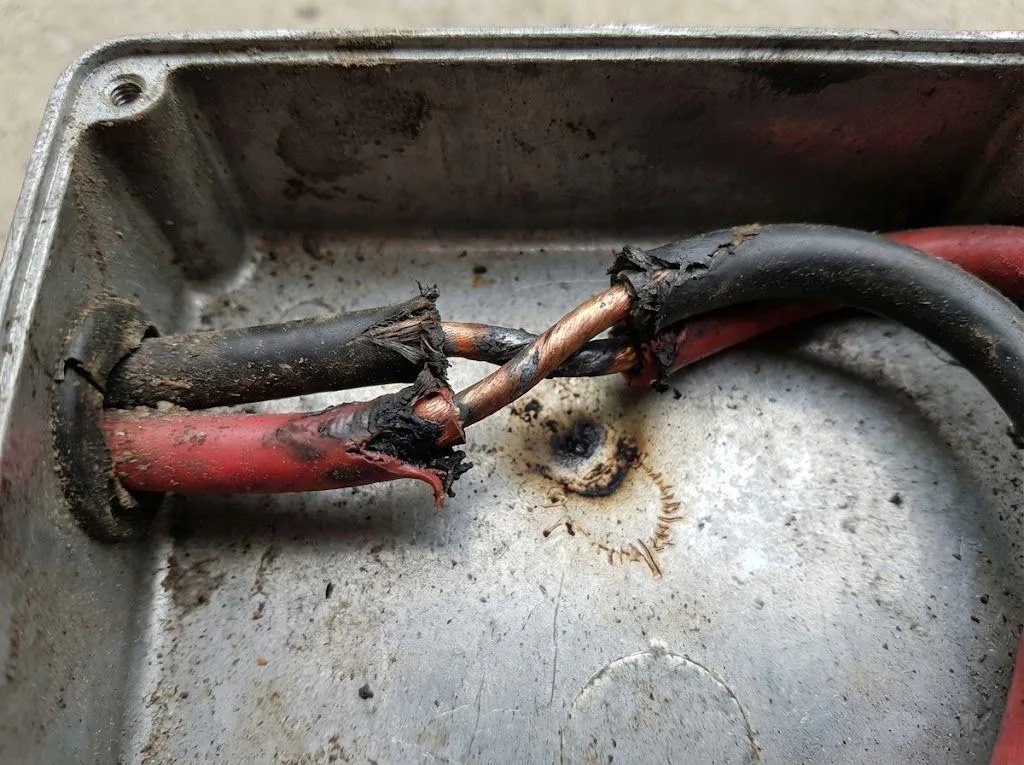
- Short Circuits: Phase-to-phase shorts in the motor windings or the cable are the most common cause.
- Ground Faults: If the motor insulation has failed or a cable is nicked and touching the conduit, current rushes to the ground instead of the motor.
- Aggressive Acceleration: If you try to spin a heavy fan from 0 to 60Hz in 1 second, the motor acts like a short circuit.
- Loose Connections: A vfd overcurrent loose breaker or loose motor terminal causes arcing. This arcing creates erratic current spikes that trip the sensors.
- Static Pressure Issues: In pumping, a vfd overcurrent supply static high situation occurs when the pump tries to push against a closed valve or a water column that is already too high. The back-pressure forces the motor to stall, spiking the amps.
Step-by-Step vfd overcurrent troubleshooting
Do not just press “Reset.” If there is a short circuit, resetting the drive repeatedly will eventually blow the IGBTs. Follow this isolation procedure.
Diagnosing a vfd overcurrent fault on startup
If the drive trips the instant you press the “Run” button (0.00 Hz), you likely have a hardware failure or a hard ground fault.
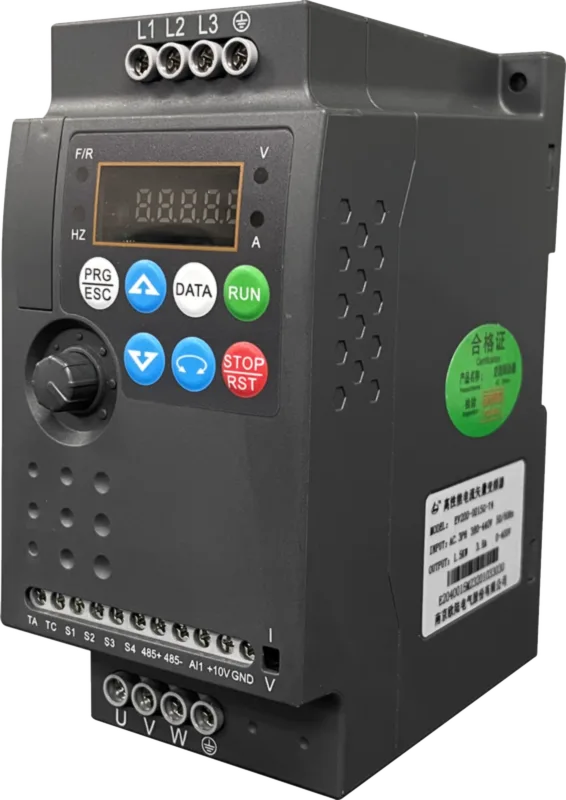
- Action: Check the output terminals (U, V, W) for a short to the ground (PE) using a multimeter (Megger). If the motor and cable are fine, the drive’s internal current sensor or IGBT bridge is likely damaged.
Solving vfd overcurrent on acceleration
If the drive starts but trips while the frequency is ramping up (e.g., at 15Hz or 30Hz), the issue is usually inertia or load.
- Action 1: Increase the Acceleration Time. In the EV200 Manual, this is parameter P0-11. If it is set to 5.0 seconds, try 10.0 or 20.0 seconds.
- Action 2: Check the Torque Boost. If the voltage boost is set too high for a light load, it saturates the motor core, causing a vfd overcurrent alarm.
Testing vfd overcurrent with no motor
This is the “Golden Rule” of VFD diagnostics. Disconnect the motor cable from the drive’s output terminals (U, V, W). Now, run the VFD empty.
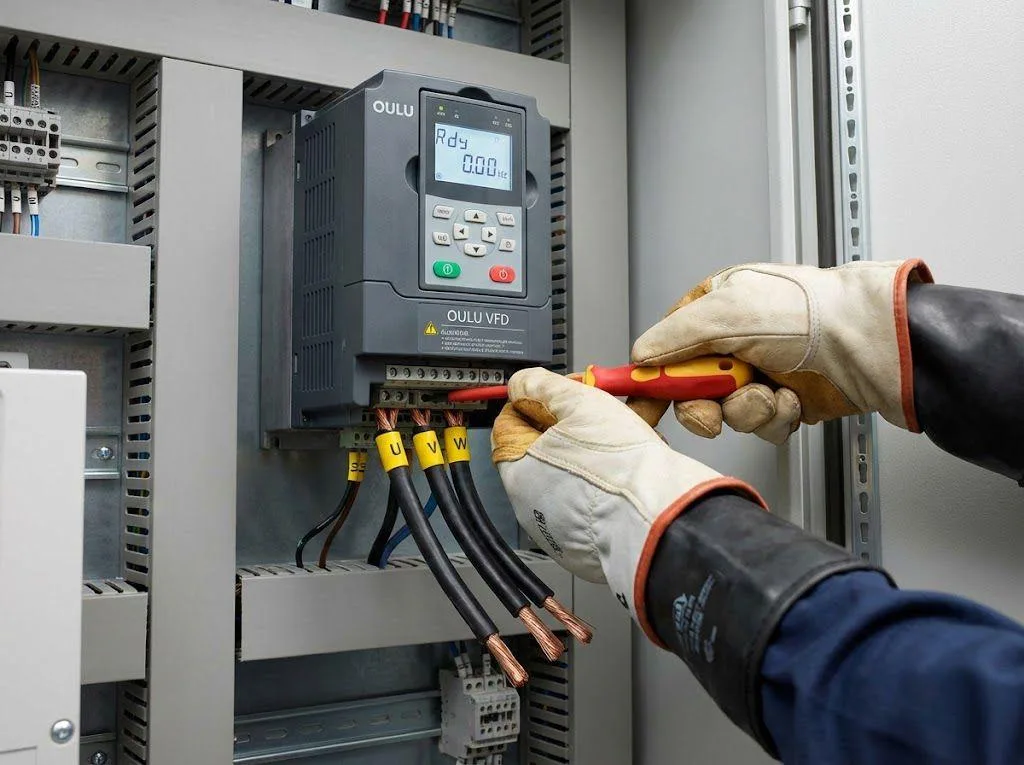
- If it still trips: The drive is dead. The internal components are shorted. Replace the unit.
- If it runs normally: The drive is fine. The problem is in your vfd motor overcurrent (the motor) or the cables leading to it.
Understanding vfd overcurrent protection Systems
We engineer protection layers into the hardware to catch these faults before smoke appears.
vfd harware overcurrent protection Mechanics
Software is too slow for a dead short. That is why vfd harware overcurrent protection exists. We use high-speed comparators connected directly to the current sensors. Vfd’s can provide instantaneous overcurrent protection within microseconds. This bypasses the main CPU and cuts the pulse signal to the IGBTs immediately. This is why you often cannot change the trip threshold—it is hard-wired for safety.
sizing overcurrent protection for vfd Input
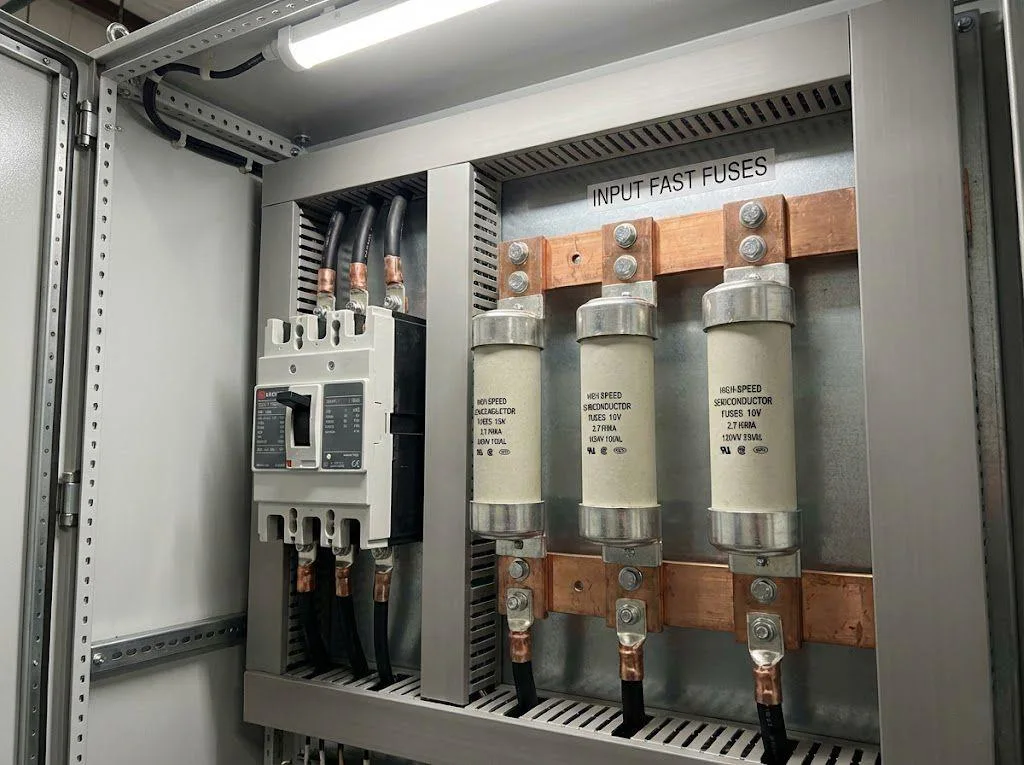
You must protect the input side of the drive. When sizing overcurrent protection for vfd input (Fuses or MCCB), do not look at the motor amps; look at the drive’s input rating.
- Recommendation: Use fast-acting semiconductor fuses or a Motor Circuit Breaker (MCCB). Refer to the OULU VFD Selection Guide for the exact breaker amperage. Never use a slow-blow thermal overload relay on the input; it will not react fast enough to protect the rectifier bridge.
OULU vfd fault codes list & Resources
When diagnosing, refer to the specific code on your display.
- FU01: Overcurrent during Acceleration. (Fix: Increase Accel time P0-11).
- FU02: Overcurrent during Deceleration. (Fix: Increase Decel time P0-12 or add a Braking Resistor).
- FU03: Overcurrent at Constant Speed. (Fix: Check for load jamming or vfd overcurrent with no motor test).
- SC: Short Circuit (IGBT module failure or output wiring short).
Frequently Asked Questions (FAQ)
What causes overcurrent in VFD?
The primary causes are physical short circuits (phase-to-phase or phase-to-ground) in the motor or cabling. Other frequent causes include aggressive acceleration settings (trying to spin up too fast), mechanical jamming (locked rotor), or loose wiring connections that create arcing. In rare cases, the VFD’s internal current sensors or IGBTs may be damaged.
What does overcurrent fault mean?
An overcurrent fault (often displayed as FU01, FU02, SC on OULU drives) means the output amperage has exceeded the drive’s hardware limit—typically 200% to 300% of the rated current—instantly. This is not a thermal warning; it is an emergency shutdown to prevent the internal transistors (IGBTs) from exploding.
What is the most common VFD failure?
In terms of nuisance tripping, Overcurrent is the most common fault we see in the field. In terms of permanent hardware failure, the most common issues are blown IGBTs (due to repeated resetting of short circuits) or dried-out DC bus capacitors (due to heat and age).
How to prevent overcurrent?
- Maintenance: Regularly check motor insulation (Megger test) and tighten all terminal connections.
- Settings: Set a realistic Acceleration Time (P0-11). Do not force a heavy fan to start in 2 seconds.
- Protection: Ensure the motor is not undersized for the mechanical load.
- Environment: Keep the VFD clean. Conductive dust causing internal arcing is a major killer.
How to fix over current fault?
Stop resetting the breaker. Follow this sequence:
- Isolate: Disconnect the motor cable from the VFD.
- Test VFD: Run the VFD empty. If it runs without tripping, the VFD is healthy.
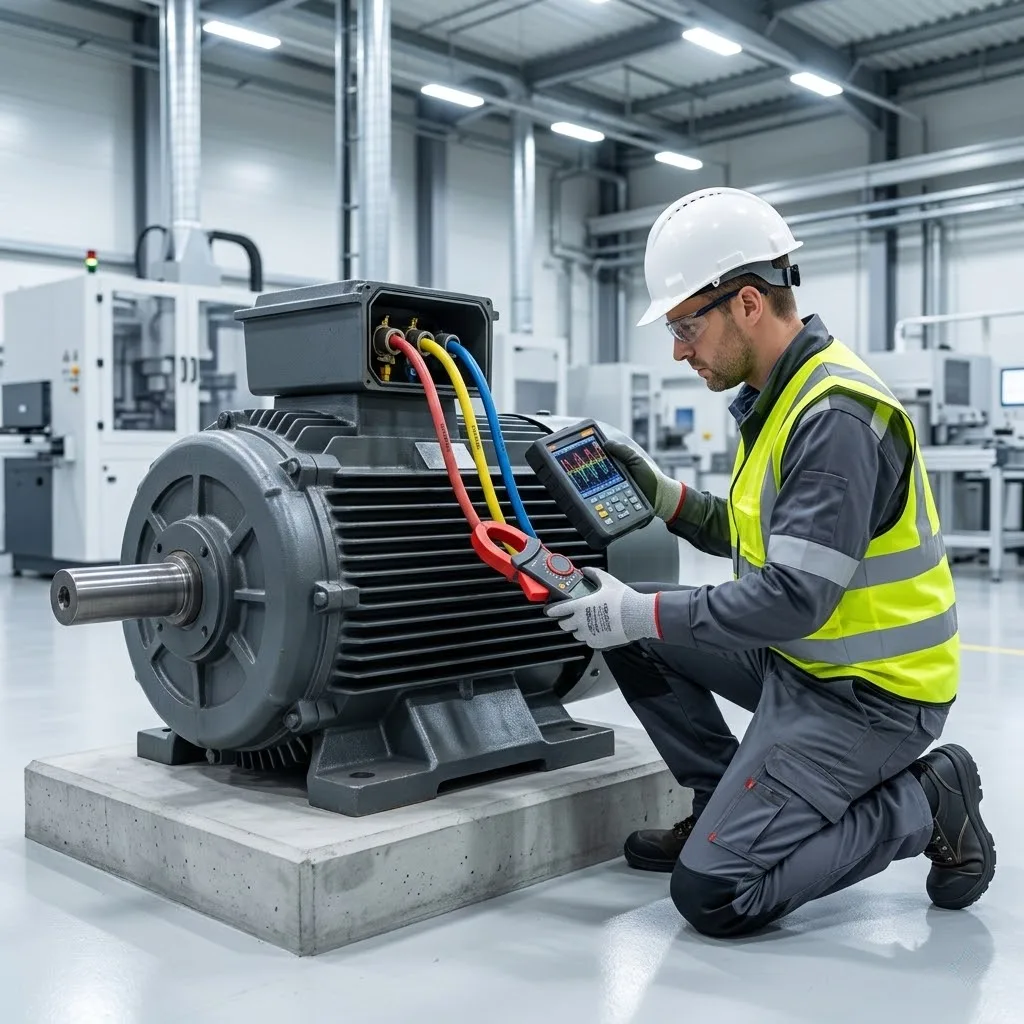
- Test Motor: If the VFD is fine, use a Megohmmeter to check the motor and cables for ground faults or phase shorts.
- Adjust: If the hardware checks out, increase the acceleration time or torque boost settings.
What is the difference between overload and overcurrent?
It is a matter of Time vs. Intensity.
- Overload (OL/FU40): A gradual buildup of heat. The current is slightly high (e.g., 120%-150%) for a period of time (seconds to minutes). It is a thermal protection.
- Overcurrent (SC/FU01): An instantaneous spike. The current hits massive levels (e.g., 300%+) in microseconds. It is a magnetic/hardware protection.
how to size overcurrent protection for vfd?
You must size input protection (Fuses or MCCB) based on the VFD’s input current rating, not the motor’s current.
- Device Type: Use High-Speed Semiconductor Fuses or an MCCB (Molded Case Circuit Breaker). Do NOT use a standard thermal overload relay on the input.
- Rating: Typically, select a breaker rated at 1.25x to 1.5x of the VFD’s maximum input amperage rating found in the OULU VFD Selection Guide. This prevents nuisance tripping during power-up inrush.